
If you’ve read my posts on eating well with EDS and what folate is and why it matters on keto, this post is where those two worlds collide. What researchers at Tulane University have discovered about the relationship between MTHFR gene variants, folate processing, and hypermobile Ehlers-Danlos Syndrome is genuinely groundbreaking — and it’s something every zebra deserves to know about. 🦓👇
A Quick Recap: What Is MTHFR?
MTHFR stands for methylenetetrahydrofolate reductase — an enzyme encoded by the MTHFR gene whose job is to convert folate (vitamin B9) from the form found in food and standard supplements into its biologically active form: 5-methyltetrahydrofolate (5-MTHF), also known as L-methylfolate.
This active form of folate is critical for:
- DNA synthesis and repair in every cell
- The methylation cycle — which governs energy, mood, hormone balance, and detoxification
- Neurotransmitter production (serotonin, dopamine, norepinephrine)
- Regulation of homocysteine (elevated homocysteine damages blood vessels and is inflammatory)
- Collagen metabolism and extracellular matrix integrity — more on this in a moment
Two common polymorphisms (variations) in the MTHFR gene — called C677T and A1298C — can reduce the enzyme’s activity significantly. Carrying two copies of these variants can reduce MTHFR enzyme function to as low as 30% of normal. It’s estimated that up to 40% of the general population carries at least one copy of these variants — meaning this is far from rare.
The Groundbreaking Tulane Research: MTHFR & hEDS
In 2023, researchers at Tulane University’s Hypermobility and Ehlers-Danlos Clinic — the only clinic in the United States focused specifically on fascia disorders — published a landmark paper in the journal Heliyon proposing something remarkable: hypermobile EDS may be caused, at least in part, by impaired folate processing due to MTHFR gene variants.
The research, led by Dr. Jacques Courseault and Dr. Gregory Bix, began with a clinical observation: patients with hEDS and hypermobility spectrum disorders consistently showed elevated levels of unmetabolized folate in their blood. Further testing revealed that the overwhelming majority of these patients carried MTHFR polymorphisms.
A 2024 follow-up study published in ACR Open Rheumatology confirmed this in 157 hEDS and HSD patients: 84.7% carried at least one MTHFR polymorphism. That is not a coincidence. That is a signal.
“You’ve got millions of people that likely have this, and until now, there’s been no known cause we’ve known to treat. It’s a big deal.” — Dr. Gregory Bix, Tulane University
How Does This Actually Work? The Mechanism Explained
Here’s the proposed mechanism, explained in plain English:
- MTHFR variants reduce enzyme activity, meaning the body can’t efficiently convert folate into its active form (5-MTHF). Unmetabolized folate accumulates in the blood while usable, active folate is deficient in tissues.
- Low active folate fails to regulate an enzyme called MMP-2 (matrix metalloproteinase 2). Normally, 5-MTHF helps “switch off” MMP-2. Without adequate active folate, MMP-2 runs unchecked.
- Overactive MMP-2 cleaves decorin — a protein that acts like the glue holding the extracellular matrix (ECM) together. The ECM is the structural scaffolding that gives shape, strength, and integrity to connective tissue.
- Without decorin holding things together, the ECM becomes disorganized and unstable — producing the loose, overly elastic connective tissue, joint hypermobility, increased scarring, and progressive multisystem symptoms characteristic of hEDS.
Additionally, folic acid deficiency has been shown in separate research to cause marked impairment in collagen synthesis — the very protein that EDS affects. The researchers also noted that the increased MMP-2 activity may explain many of the inflammatory and pain symptoms experienced by hEDS patients beyond just joint laxity.
What This Means for Diagnosis
This research opens up a genuinely new avenue for diagnosis. Currently, hEDS is diagnosed entirely on clinical criteria — there is no genetic test. The Tulane team proposed that blood tests showing elevated unmetabolized serum folate combined with MTHFR polymorphism testing could become a meaningful diagnostic tool to identify patients whose hypermobility has a folate-dependent component.
This is still emerging research — it’s important to be honest about that. Not all hEDS patients have MTHFR variants, and the causative role of these variants is not yet universally accepted across all large-scale genetic studies. But the clinical observations are compelling, the proposed mechanism is biologically plausible, and the treatment is safe. More research is underway.
The Treatment: Why Methylfolate Is Not the Same as Folic Acid
Here’s the critical point: if you have an MTHFR variant, taking standard folic acid supplements — the synthetic form in most over-the-counter vitamins — does NOT solve the problem. Because your MTHFR enzyme is impaired, folic acid sits unmetabolized in your bloodstream rather than converting to the active form your body needs.
The solution is L-methylfolate (5-MTHF) — the pre-converted, biologically active form that bypasses the MTHFR enzyme entirely. Your body can use it immediately without any conversion step. This is exactly what the Tulane researchers proposed as a potential treatment for folate-dependent hEDS: supplementation with methylfolate rather than folic acid.
Patients in the Tulane clinic who were treated with active folate reported improvements including less pain, less brain fog, fewer allergies, and improved gastrointestinal function. “It’s an innocuous treatment,” Dr. Bix said. “It’s not dangerous, and it’s a vitamin that can improve people’s lives.”
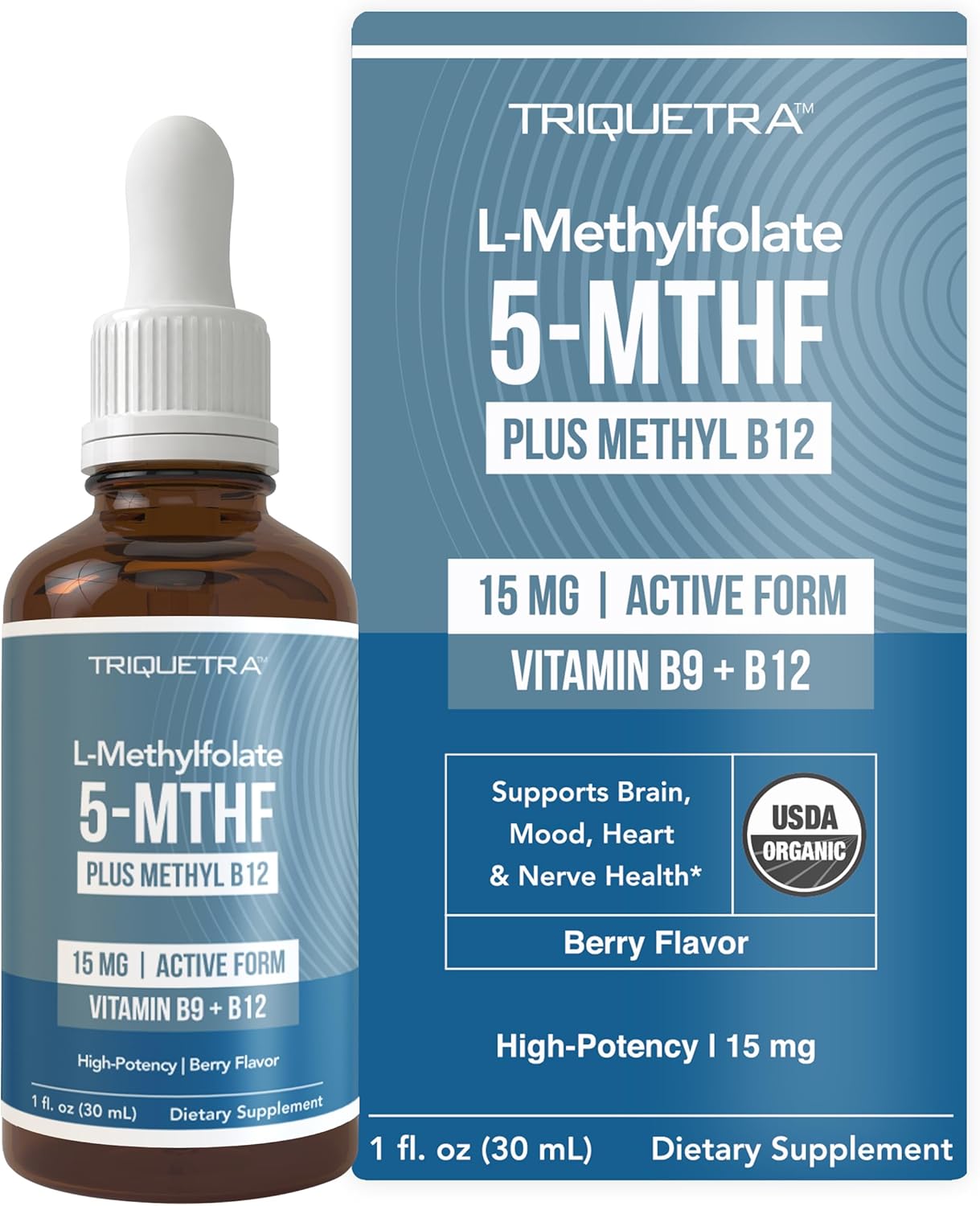
The L-methylfolate supplement I’ve researched and linked for this community is available here: L-Methylfolate (5-MTHF) on Amazon. As always, please talk to your doctor before starting any new supplement — especially at higher doses, as dosing of methylfolate is individualized and should be supervised. 💚
The MTHFR + EDS Connection: A Summary
| What We Know | Detail |
|---|---|
| MTHFR variants in hEDS patients | 84.7% of hEDS/HSD patients in Tulane study carried at least one MTHFR polymorphism |
| How common is MTHFR in general population? | Estimated 40% carry at least one variant; 15–20% carry two copies |
| What MTHFR variants do | Reduce enzyme activity to as low as 30% of normal, impairing folate conversion |
| The proposed mechanism | Low active folate → unchecked MMP-2 → decorin cleavage → ECM disorganization → hypermobility |
| The proposed treatment | L-methylfolate (5-MTHF) supplementation — bypasses the MTHFR enzyme entirely |
| Clinical results reported | Less pain, reduced brain fog, fewer allergies, improved GI function in treated patients |
| Where the research stands | Compelling and promising; further studies underway; not yet universally accepted |
What This Means If You Have EDS
If you have hypermobile EDS or a hypermobility spectrum disorder, here is what I would encourage you to do with this information:
- 🦓 Ask your doctor about MTHFR testing. It’s a simple blood test or genetic test. Knowing whether you carry C677T or A1298C variants is genuinely useful information.
- 🧠 Ask about serum folate and homocysteine levels. Elevated unmetabolized folate and elevated homocysteine are both markers the Tulane team identified. These are standard lab tests.
- 💊 If you supplement, use L-methylfolate — not folic acid. Standard folic acid won’t help if your MTHFR enzyme is impaired. Look for supplements labeled L-methylfolate, 5-MTHF, or methylated folate.
- 🥬 Prioritize food-based folate. Regardless of supplementation, eating leafy greens, eggs, avocado, and liver regularly provides natural folate that your body handles differently than synthetic folic acid.
- 💚 Work with your medical team. This is emerging research, not settled science. Bring these studies to your doctor — especially if you see a rheumatologist, geneticist, or EDS specialist. They may be very interested.
The Keto Connection
For those of us who are both zebras and keto dieters, the intersection here is important to understand:
As I covered in my post on folate and keto, going keto removes the fortified grain foods that most people rely on as their primary folic acid source. For someone without MTHFR variants, this is manageable with good food choices. For someone with hEDS and an MTHFR variant, the stakes are higher — and being intentional about folate intake on keto is genuinely important.
The good news: keto’s emphasis on leafy greens, eggs, avocado, and liver — when followed as a whole-food approach rather than a fat bomb and protein shake approach — is actually well-aligned with supporting natural folate intake. A clean, vegetable-rich keto diet and L-methylfolate supplementation may be a powerful combination for zebras managing EDS alongside a ketogenic lifestyle.
The Bottom Line
The connection between MTHFR, folate processing, and hypermobile EDS is one of the most exciting and hopeful developments in the EDS research space in years. It offers a potential explanation for something that has baffled medicine for decades — and a treatment that is safe, accessible, and already available. The research is still emerging, but the signal is strong enough to be worth knowing about and worth discussing with your doctor.
You are not imagining it. You are not broken. And science is finally catching up. 🦓💛
👉 Shop L-Methylfolate (5-MTHF) on Amazon
Are you an EDS or HSD patient who has been tested for MTHFR? Have you tried methylfolate? I’d love to hear your experience in the comments — this community’s lived knowledge is invaluable. 👇
💰 Transparency note: This post contains an affiliate link. If you purchase through my link I may earn a small commission at no extra cost to you.
⚠️ Disclaimer: This post is based on published research and personal perspective and is for informational purposes only. It does not constitute medical advice. MTHFR testing, folate supplementation, and any treatment decisions should be made with a qualified healthcare provider. The research discussed is emerging and preliminary — not all findings have been replicated or universally accepted. Always consult your doctor before starting any new supplement, especially at therapeutic doses.
Leave a Reply