
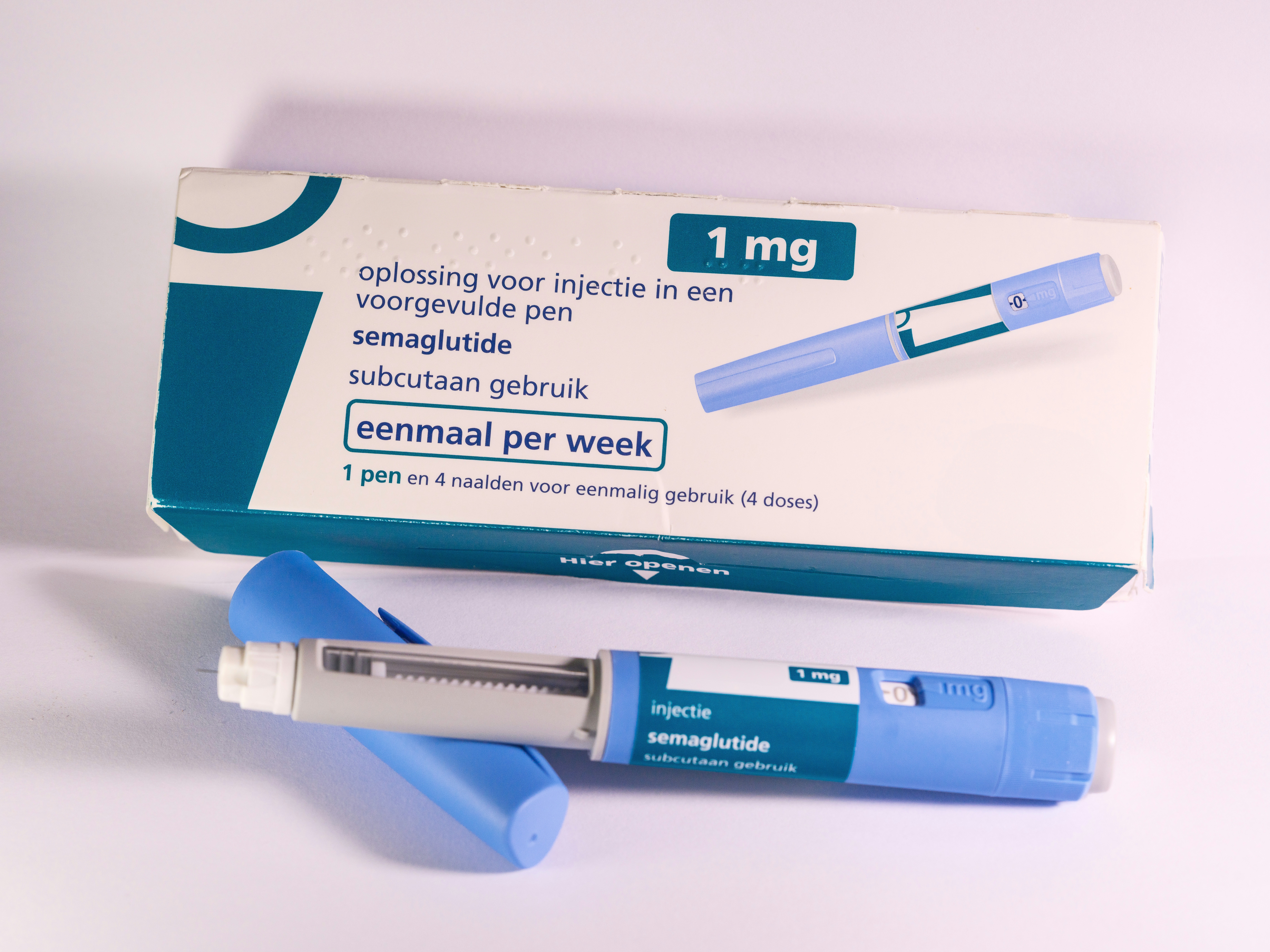
Unless you’ve been living completely off the grid, you’ve heard about Ozempic. And Wegovy. And Mounjaro. GLP-1 drugs have completely taken over the weight loss conversation — they’re on the news, in your social media feed, and probably being discussed at your next family gathering. So where does that leave keto? Today I’m sharing my honest, real-talk take on the GLP-1 vs. keto debate — because I think there’s a lot the headlines are missing. 👇
First — What Even Are GLP-1 Drugs?
GLP-1 stands for glucagon-like peptide-1 — a hormone your body naturally produces after you eat. It signals your brain that you’re full, slows digestion, and helps regulate blood sugar. GLP-1 receptor agonist drugs like Ozempic, Wegovy, and Mounjaro work by mimicking that hormone at much higher levels than your body produces on its own.
The result? Dramatically reduced hunger, slower gastric emptying, and for many people — significant weight loss. They were originally developed to treat Type 2 diabetes, but have since taken the weight loss world by storm. As of early 2026, there’s even a pill version now — the Wegovy pill was just approved and became one of the fastest drug launches in history.
So yeah. They’re kind of a big deal right now.
The Case For GLP-1 Drugs (Let’s Be Fair)
I want to be clear: I’m not here to demonize these medications. For some people, they are genuinely life-changing — and I think it’s important to acknowledge that honestly.
Here’s what the research actually shows GLP-1 drugs can do well:
- 🔥 Significant weight loss — Clinical trials show 15–21% average body weight reduction, which is genuinely impressive
- 🩸 Blood sugar control — Originally designed for Type 2 diabetes, they’re very effective at improving insulin response
- ❤️ Cardiovascular benefits — Studies show meaningful reductions in cardiovascular events in high-risk patients
- 🧠 Emerging mental health benefits — Recent research has found associations with reduced depression and anxiety symptoms, which is fascinating
For someone with serious obesity-related health complications, or who has struggled with traditional diet approaches for years, these benefits are real and meaningful. I don’t want to dismiss that.
But Here’s What the Headlines Aren’t Telling You
The GLP-1 conversation tends to focus almost entirely on weight loss numbers. And weight loss numbers are exciting! But they’re not the whole story — not by a long shot.
The side effects are real. Between 40 and 70 percent of patients on GLP-1 drugs report gastrointestinal side effects — nausea, acid reflux, constipation, chronic diarrhea. Research has also flagged significantly elevated risks of gastroparesis (a chronic gut slowdown) and pancreatitis compared to other weight loss approaches. That’s not a minor footnote.
About half of people quit within a year. And when they do? Studies show rapid weight regain — because the drug was doing the work, not a new set of habits or relationship with food.
Nutrition guidance is largely missing. Most people starting GLP-1s get little to no counseling on what to eat while on them — and because their appetite is so suppressed, many end up undernourished. Every bite has to count, but nobody is teaching them how.
They’re still very expensive. Insurance coverage remains inconsistent, and for many people the cost is simply not sustainable long-term.
So Where Does Keto Fit In?
Here’s my honest take: keto and GLP-1 drugs are not really competing for the same thing. They’re solving different problems — and that distinction matters a lot.
GLP-1 drugs are a medical intervention. They work on your hormones pharmacologically. They can produce impressive short-term results, and for people with serious metabolic disease, they may be the right tool.
Keto is a lifestyle. It’s a way of eating — and for many of us, a way of living — that teaches your body to become a fat-burning machine naturally. No prescription. No injections. No side effects beyond the temporary keto flu (which, if you’ve been here a while, you know how to handle 😉). Just real food, steady energy, and a metabolic shift your body learns to sustain on its own.
I’ve never once worried about what happens when I “stop doing keto.” Because keto isn’t something I do — it’s how I eat. That’s the difference between a drug and a lifestyle, and it’s everything.
The Sustainability Question Nobody Is Asking
This is the part of the conversation I think gets glossed over, and it’s the part I care about most.
Weight loss is not the goal. Health is the goal. And health is not a 12-week transformation. It’s not a before-and-after photo. It’s the thousands of ordinary days in between — the energy to play with your kids, the mental clarity to do your best work, the confidence that comes from knowing your body is running the way it was meant to.
That kind of health requires a foundation. And a foundation has to be built from habits, not hormones.
When I eat keto, I’m not fighting my hunger — I’m genuinely satisfied. I’m not white-knuckling past cravings — my blood sugar is stable enough that those cravings largely don’t show up. I’m not dreading meals — I’m making food I love that happens to fuel me incredibly well. That is sustainable. That is a lifestyle.
Can you say that about a drug you might have to take indefinitely, that costs hundreds of dollars a month, and that half of people stop taking within a year?
Can You Do Both? (The Honest Answer)
Actually — yes, and some doctors are starting to recommend exactly that. Because here’s the thing: the nutrition vacuum that exists around GLP-1 use is a real problem. People on these drugs are eating less but not necessarily eating better. Pairing a GLP-1 with a clean keto approach could theoretically address that gap — making every reduced-appetite bite count with nutrient-dense, satiating, blood-sugar-stable food.
There’s also a compelling argument that keto may actually support your body’s natural GLP-1 production. When you eat low-carb and high-fat, your gut produces more of its own GLP-1 hormone naturally — which is part of why keto is so effective at reducing hunger and stabilizing blood sugar without a prescription.
In other words: keto might be doing some of what these drugs do — just without the side effects, the cost, or the dependence.
My Bottom Line
I’m not anti-GLP-1. I’m not going to tell you these drugs don’t work, because the data says otherwise. For some people, in some situations, they may be genuinely the right choice — and that’s between them and their doctor.
But I am pro-lifestyle. I am pro-food-as-medicine. I am pro-building-something-you-can-actually-live. And for me — and for a lot of us in this community — that’s keto.
Keto gives you the tools to change your relationship with food permanently. It teaches your body to run on fat. It stabilizes your blood sugar, quiets your cravings, and gives you a framework for eating that doesn’t have an expiration date. And it costs nothing more than a grocery run and a little planning.
That’s not a diet. That’s a life.
I’d genuinely love to hear your thoughts on this one — it’s a big conversation and there’s no single right answer. Are you on a GLP-1? Doing keto? Both? Neither? Drop your experience in the comments below — this community is always my favorite place to have the real talk. 👇
Leave a Reply